
Good Machine Learning Practices (GMLP) Statement for Vetology’s AI X-ray Screening Tool

Good Machine Learning Practices (GMLP) Statement for Vetology’s AI X-ray Screening Tool

This article examines Vetology’s commitment to Good Machine Learning Practices (GMLP) in developing its AI-powered X-ray screening tool for veterinary use. It outlines the rigorous processes involved in data collection, model training, validation, deployment, and ongoing monitoring to ensure safety, efficacy, and reliability. It emphasizes transparency, bias mitigation, and compliance with FDA guidelines, reinforcing Vetology’s dedication to advancing veterinary diagnostics. Read more about how:

  • Vetology ensures data diversity and expert annotation in model development.
  • The AI tool undergoes comprehensive validation and clinical testing.
  • Continuous performance monitoring and user feedback are integral to the system.
  • Robust security protocols protect sensitive data throughout the process.

Good Machine Learning Practices (GMLP) Statement

Vetology is committed to advancing veterinary medicine through innovative technologies. Our AI-powered tool for screening canine and feline X-rays exemplifies our dedication to enhancing diagnostic accuracy and efficiency. This statement outlines our adherence to Good Machine Learning Practices (GMLP) across the development, deployment, and maintenance of our AI model.  
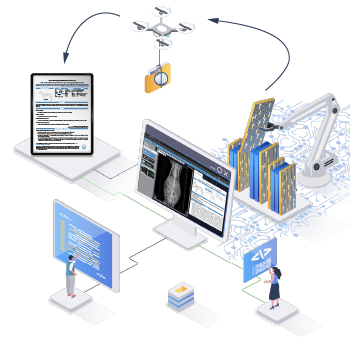
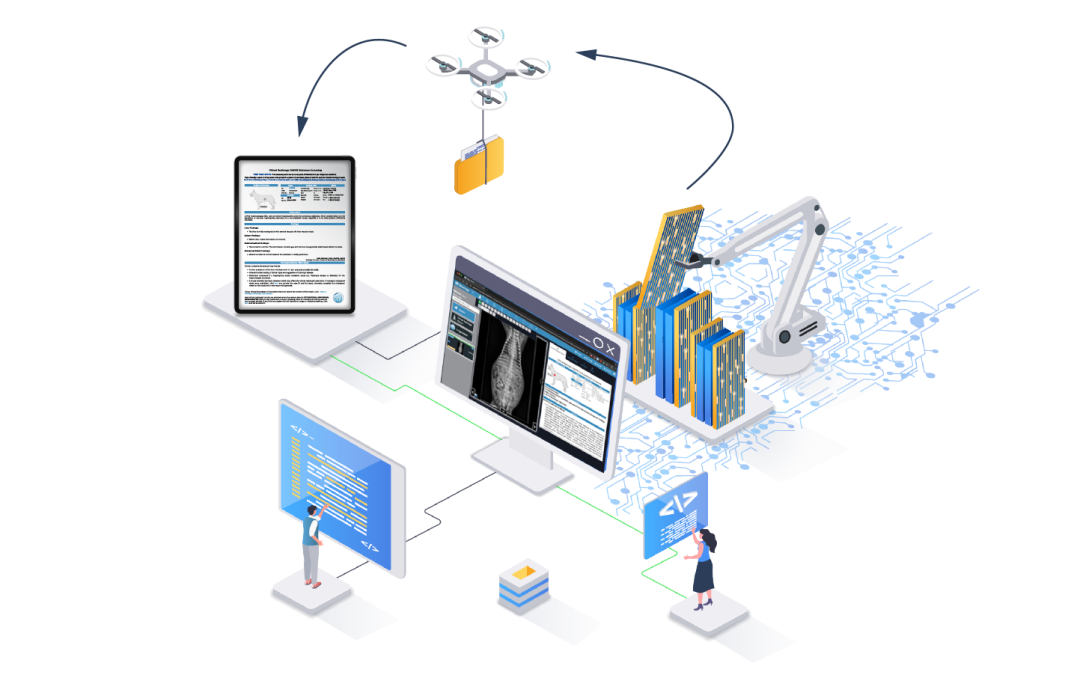
graphic suggesting how the system is trained.

A. Explanation of AI Model Development

Our AI model is developed using a rigorous and systematic process to ensure reliability and clinical relevance.

  • Data Collection and Preprocessing: We aggregate a diverse dataset of anonymized canine and feline X-rays from various sources to capture a wide range of anatomical variations and pathological conditions. Data is de-identified in compliance with privacy regulations.
  • Annotation and Labeling: Experienced veterinary radiologists annotate the images, providing high-quality labels that serve as ground truth for training. This ensures that the model learns from expert interpretations.
  • Model Architecture: We employ state-of-the-art deep learning architectures optimized for image analysis, such as convolutional neural networks (CNNs), to effectively process and interpret radiographic images.
  • Training Process: The model is trained using supervised learning techniques with hyperparameter tuning to optimize performance metrics like accuracy, sensitivity, and specificity.
  • Bias Mitigation: We actively identify and mitigate potential biases by ensuring balanced representation across species, breeds, ages, and pathological conditions in the training dataset.

B. Explanation of AI Model Pre-release Assurance of Safety and Effectiveness

Before releasing the AI tool, we conduct comprehensive evaluations to ensure it meets safety and efficacy standards.

  • Validation Studies: The model undergoes rigorous validation using separate datasets not seen during training to assess its generalizability and robustness.
  • Performance Metrics: We evaluate key performance indicators, including accuracy, sensitivity, specificity, and area under the ROC curve (AUC), to quantify the model’s diagnostic capabilities.
  • Clinical Testing: Pilot studies are conducted in clinical settings where veterinary professionals use the tool in real-world scenarios to provide feedback on usability and effectiveness.
  • Regulatory Compliance: We ensure that our AI tool complies with FDA guidelines for Good Machine Learning Practices.
  • Risk Assessment: A thorough risk analysis is performed to identify potential failure modes, and appropriate safeguards are implemented to mitigate any identified risks.

C. Explanation of AI Production Model Deployment and Ongoing Monitoring

Upon deployment, we maintain vigilant oversight of the AI tool’s performance and impact.

  • Integration with Existing Systems: The AI tool is seamlessly integrated into veterinary workflows, ensuring minimal disruption and maximal utility.
  • User Training and Support: We provide comprehensive training materials and support services to help veterinary professionals effectively utilize the tool.
  • Performance Monitoring: Continuous monitoring systems are in place to track the model’s performance in real-time, detecting any deviations from expected outcomes.
  • Feedback Mechanisms: We encourage and facilitate user feedback to identify any issues or areas for improvement, fostering a collaborative environment for refinement.
  • Data Security: Robust security protocols protect sensitive data during transmission and storage, complying with industry standards for data protection.

D. Explanation of AI Device Ongoing Re-training, Modifications, and Versioning

We recognize the importance of keeping the AI model current with evolving medical knowledge and practices.

  • Periodic Re-training: The model is periodically retrained with new data to incorporate the latest findings and address any drift in performance.
  • Change Management: Any modifications to the model undergo a structured change management process, including re-validation and documentation.
  • Version Control: We maintain strict version control, documenting changes between versions and ensuring traceability of updates.
  • Regulatory Updates: Updates to the model are evaluated for regulatory impact, and we ensure continued compliance with applicable regulations.
  • Transparency: Users are informed of significant updates or changes to the AI tool, including improvements in performance or functionality.

Conclusion

Vetology is dedicated to providing safe, effective, and reliable AI solutions for veterinary radiology. Through adherence to Good Machine Learning Practices, we strive to enhance diagnostic capabilities while maintaining the highest standards of quality and ethics.


PODCAST – AI-Driven Teleradiology

PODCAST – AI-Driven Teleradiology

Veterinary Innovation Podcast
Episode 270 – Dr. Seth Wallack | Vetology

Join the clever minds behind the Veterinary Innovation Podcast – Shawn Wilkie, CEO of Talkatoo, and Dr. Ivan Zak, CEO of Veterinary Integration Solutions – as they sit down with our own Dr. Seth Wallack, DACVR, founder and CEO of Vetology to explore the integration of artificial intelligence and teleconsulting in radiology.

In this episode, they discuss AI-driven teleradiology, which helps veterinarians receive faster preliminary reports, streamlines decision-making, and boosts radiologists’ efficiency. 

Dr. Wallack highlights that Vetology’s AI assists by providing initial insights and supporting veterinarians without replacing their clinical judgment or changing existing workflows. Veterinarians can use these AI-generated reports to make informed treatment decisions or request further consultation from a radiologist.

Topics Covered in the Conversation

  • AI-Enhanced Teleradiology
  • Quality Control and Workflow Integration
  • Upcoming Innovations

More from this podcast and Episode: Click to read more

I

Listen to the Podcast

This Podcast is available on all popular podcast streaming services.

PODCAST – AI-Driven Teleradiology

Artificial Intelligence in Clinical Radiology

Veterinary Innovation Podcast
Episode 68 – Dr. Seth Wallack | Vetology

Join the clever minds behind the Veterinary Innovation Podcast – Shawn Wilkie, CEO of Talkatoo and Dr. Ivan Zak, CEO of Veterinary Integration Solutions – as we discuss veterinary radiology with our own Dr. Seth Wallack, DACVR.

One of the largest issues in veterinary radiology today is an incredibly high caseload. Radiologists in North America consult on 2.5 million cases per year, and that number is projected to more than double within the next three years. With fewer educational opportunities available in radiology, how can this vital specialization keep up with the demand?

This week on the Veterinary Innovation Podcast, Shawn and Ivan speak with Dr. Seth Wallack, the founder and CEO of Vetology, about how artificial intelligence can improve the workflow of clinical radiologists, whether we’re too late in adopting it, and how the best veterinarians are those who are most eager to learn.

Topics Covered in the Conversation

  • The shrinking number of Radiologists and how AI can fill those gaps.
  • The adoption of new technologies in clinical radiology.
  • Higher amounts of specialization in veterinary medicine.

More from this podcast and Episode: Click to read more

I

Listen to the Podcast

This Podcast is available on all popular podcast streaming services.

How Intelligent Is Artificial Intelligence?

How Intelligent Is Artificial Intelligence?

This article examines how to assess the effectiveness of artificial intelligence (AI) in veterinary radiology by focusing on clinical performance metrics such as sensitivity and specificity. It emphasizes the importance of evaluating AI tools using confusion matrix tables, which compare AI results against veterinary radiologist reports.  It also highlights the necessity for AI systems to operate autonomously to ensure valid results. Read more about how:

  • Sensitivity measures the AI’s ability to correctly identify patients with a condition.
  • Specificity assesses the AI’s accuracy in identifying patients without a condition.
  • Confusion matrix tables provide a detailed comparison of AI and radiologist assessments.
  • Autonomous AI systems are crucial for reliable diagnostic outcomes.

AI For Human And Veterinary Radiology

Radiology Artificial Intelligence, commonly referred to as AI, is in full development, and the FDA is actively testing AI in human radiology. In veterinary radiology we’re not far behind and are quickly catching up. Veterinary medicine AI product development’s greatest strength is also its greatest weakness. That is, oversight, or more specifically, the lack of oversight by a governing body.

In human radiology, AI products require FDA oversight and approval prior to coming to market (see the American Association of Veterinary Radiologists GMLP write-up here to learn more. Some veterinary products do fall under FDA oversight, BUT veterinary radiology AI isn’t one of them. This means a veterinary radiology AI company can develop quickly, but also has no formal obligation to demonstrate that its product actually works.

If a company doesn’t provide clinical test results, it is up to you, the veterinarian, to determine the worthiness of the product. A true ‘caveat emptor.’

Assessment Is Critical

So how should a veterinarian assess a veterinary radiology AI product? The same way the entire medical community evaluates any diagnostic test for a condition, by measuring clinical performance.

The two standard measures of clinical performance are SENSITIVITY and SPECIFICITY.

To better understand how these measures can assist us to asses clinical performance, we will briefly revisit a couple of formulas from that old favorite – statistics class.

Sensitivity And Specificity

SENSITIVITY is the probability that a test will identify a patient who HAS a condition (true positive). It is calculated by the following formula:

formula: sensitivity = true positives/(true positives + false negatives)
formula: specificity = true negatives/(true negatives + false positives)

SPECIFICITY is the probability a test will correctly identify a patient who DOES NOT have a condition (true negative). It is calculated by the following formula:

The Confusion Matrix

These two standard measures of clinical performance lead us to the four outcomes possible for each patient:

True Positive  |  False Positive  |  True Negative  |  False Negative

The four outcomes are typically reported in a 2 x 2 table called a confusion matrix, showing the total numbers of true and false positives and negatives. A generic example is shown here next.

A Typical Confusion Matrix

Name of Condition or Disease

Total Number of Cases Measured

% Sensitivity

% Specificity

Radiologist Positive Radiologist Negative
AI Positive # of cases # of cases
AI Negative # of cases # of cases

Vetology’s AI Testing

Vetology’s AI testing evaluates AI results against veterinary radiologist reports as a reference standard. The results and confusion matrix tables are displayed just below on this page.

The Truth Is In The Confusion Matrix

To help you evaluate a product’s performance, always ask an AI vendor for their confusion matrix tables.

Also, be aware that an AI product MUST be 100% autonomous to have a valid result. If a human intervenes during any part of the result creation, it’s not artificial intelligence, it’s human intelligence.

Next we show the confusion matrix for several diseases among 75 random cases:

Cardiomegaly

47 Cases

90% Sensitivity

76% Specificity

Radiologist Positive Radiologist Negative
AI Positive 17 19
AI Negative 3 8

Heart Failure

39 Cases

100% Sensitivity

89% Specificity

Radiologist Positive Radiologist Negative
AI Positive 3 4
AI Negative 0 32

Dynamic Airway Pattern

30 Cases

100% Sensitivity

85% Specificity

Radiologist Positive Radiologist Negative
AI Positive 3 4
AI Negative 0 23

Dynamic Airway Collapse

30 Cases

67% Sensitivity

93% Specificity

Radiologist Positive Radiologist Negative
AI Positive 2 2
AI Negative 1 25

Buyers Beware

As we said earlier in this article, AI brings to the forefront of your purchase decision-making, the phrase ‘caveat emptor,’ or buyer beware. Make sure you review the provider’s confusion matrix tables (if they have them at all), and make sure their AI is fully autonomous, else you’ll just be buying expensive human intelligence.

At Vetology, we assertively and proactively test ourselves and continually train and improve the AI for everyone’s benefit. We are as transparent as possible. We have the data and are willing to publish it.

If you have any questions about our veterinary radiology software or services, we encourage you to contact us..

Pin It on Pinterest